
 Stray Losses
Stray losses are caused by leakage flux that induces currents in structural parts such as tank walls, clamps, and supports.
Although relatively small, they become significant in large power transformers.
 Dielectric Losses
Dielectric losses occur in the insulating materials of the transformer due to alternating electric stress.
These losses are generally minimal but must be considered in high-voltage applications.
Total Transformer Loss Equation
The total transformer loss can be expressed as:
Total Loss = Core Loss + Copper Loss + Stray Loss + Dielectric Loss
Transformer Efficiency
Efficiency is a key performance indicator and is inversely related to transformer loss.
Efficiency Formula:
η = Output Power / (Output Power + Losses)
Example Calculation
- Core Loss = 600 W
- Copper Loss = 400 W
- Output Power = 20,000 W
η = 20000 / (20000 + 1000) = 95.2%
Factors Affecting Transformer Loss
Several parameters influence transformer loss:
 Load Current
Higher current increases copper loss significantly.
Voltage Level
Higher voltage increases core loss.
Frequency
Higher frequency increases both hysteresis and eddy losses.
Core Material
Better materials reduce magnetic losses.
Temperature
Higher temperature increases resistance and losses.
Methods to Reduce Transformer Loss
Minimizing transformer loss is a key design objective.
 Use High-Grade Core Materials
Silicon steel or amorphous core materials reduce hysteresis loss.
Laminated Core Construction
Thin laminations reduce eddy current loss.
Optimize Winding Design
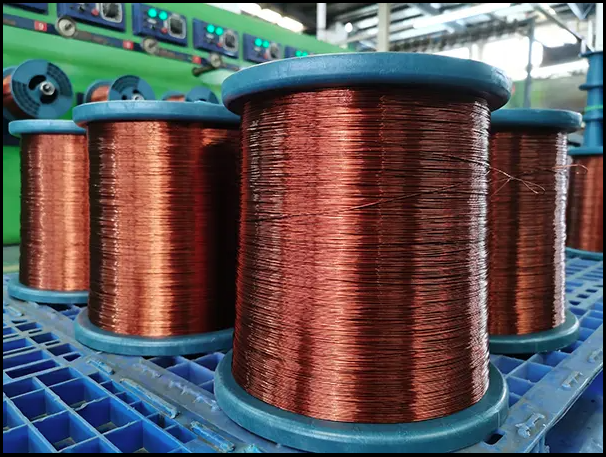
Using low-resistance conductors reduces copper loss.
Efficient Cooling Systems
Oil cooling or air cooling helps maintain temperature.
Proper Load Management
Operating near optimal load improves efficiency.
Transformer Loss in Power Systems
In large-scale power systems, even small percentage losses translate into significant energy wastage.
Reducing transformer-loss leads to:
- Lower transmission losses
- Improved grid efficiency
- Reduced environmental impact
- Cost savings for utilities
Practical Applications
Transformer loss analysis is critical in:
 Power Generation Plants
Ensuring efficient energy transmission.
Industrial Systems
Reducing operational costs.
Renewable Energy Systems
Optimizing solar and wind power conversion.
Electrical Distribution Networks
Improving reliability and efficiency.
Transformer-Loss vs Efficiency
| Parameter | Transformer Loss | Efficiency |
|---|---|---|
| Definition | Energy dissipated | Useful output |
| Goal | Minimize | Maximize |
| Impact | Negative | Positive |
Advanced Insight: Load vs Loss Relationship
- At no load, only core loss exists
- At full load, copper loss dominates
- Maximum efficiency occurs when:
 Core Loss = Copper Loss
This condition is crucial in transformer design.
Best Practices for Engineers
- Perform detailed loss calculations during design
- Use simulation tools for optimization
- Monitor temperature and load conditions
- Conduct periodic maintenance and testing
Conclusion
Transformer-loss is an unavoidable but controllable aspect of transformer operation. By understanding its types—core loss, copper loss, stray loss, and dielectric loss—engineers can design more efficient and reliable systems.
Minimizing transformer loss not only improves efficiency but also reduces energy costs and enhances system performance. With proper design, material selection, and maintenance, modern transformers can achieve very high efficiency levels.
For electrical engineers and students alike, mastering the concept of transformer loss is essential for building efficient power systems.
 FAQs
FAQs
What is transformer loss?
Transformer loss is the energy dissipated as heat and other forms during transformer operation.
What are the main types of transformer-loss?
Core loss and copper loss are the primary types, along with stray and dielectric losses.
What is copper loss?
Copper loss is caused by resistance in the windings and increases with load current.
What is core loss?
Core loss occurs due to hysteresis and eddy currents in the transformer core.
How can transformer-loss be reduced?
By using high-quality materials, laminated cores, efficient cooling, and proper design.
Why is transformer efficiency important?
Higher efficiency reduces energy waste and improves system reliability.