
Transformer Turns Ratio Calculator – Understanding Voltage Transformation in Electrical Engineering
Transformers are one of the most important components in electrical engineering. They play a crucial role in transmitting electrical power efficiently over long distances. Whether it is power distribution, industrial applications, or electronic circuits, transformers help convert voltage levels to meet different requirements. A key concept behind transformer operation is the transformer turns ratio.
The Transformer Turns Ratio Calculator available on Engineering.CalculatorFree.in helps engineers, students, and technicians quickly calculate the relationship between primary and secondary windings in a transformer. Instead of performing manual calculations, users can obtain accurate results instantly.
Electrical engineers often rely on tools like a Transformer Turns Ratio Calculator to quickly determine the relationship between primary and secondary windings. Instead of solving formulas manually, a Transformer Turns Ratio Calculator helps users calculate voltage transformation accurately within seconds.
In this article, we will explore the concept of transformer turns ratio, why it is important, how it is calculated, and how the calculator tool can simplify electrical engineering calculations.
What Is Transformer Turns Ratio?
The transformer turns ratio refers to the ratio between the number of turns in the primary coil and the number of turns in the secondary coil of a transformer.
This ratio determines how voltage changes between the primary and secondary circuits.
In simple terms:
If the secondary coil has more turns than the primary coil, the transformer increases voltage.
If the secondary coil has fewer turns, the transformer reduces voltage.
This concept forms the basis of step-up and step-down transformers used in power systems.
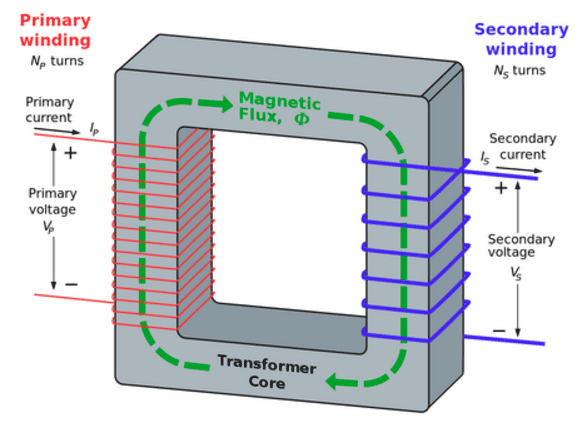
The Basic Transformer Turns Ratio Formula
The relationship between voltage and the number of coil turns is expressed through the transformer equation.
\frac{V_p}{V_s} = \frac{N_p}{N_s}
Where:
Vp = Primary voltage
Vs = Secondary voltage
Np = Number of turns in primary coil
Ns = Number of turns in secondary coil
This formula shows that voltage changes proportionally with the number of coil turns.
Why Transformer Turns Ratio Is Important
Understanding the transformer turns ratio is essential for several reasons in electrical engineering.
Voltage Conversion
The main function of a transformer is to convert voltage levels. Power plants generate electricity at certain voltages, but long-distance transmission requires higher voltages to reduce losses.
A correct turns ratio ensures proper voltage transformation.
Efficient Power Transmission
Electric power grids rely on transformers to transmit electricity efficiently across cities and countries.
Without proper transformer design and turns ratio calculation, energy losses would increase significantly.
Equipment Protection
Electrical equipment is designed to operate at specific voltage levels. Transformers help adjust voltage safely to protect devices and systems.
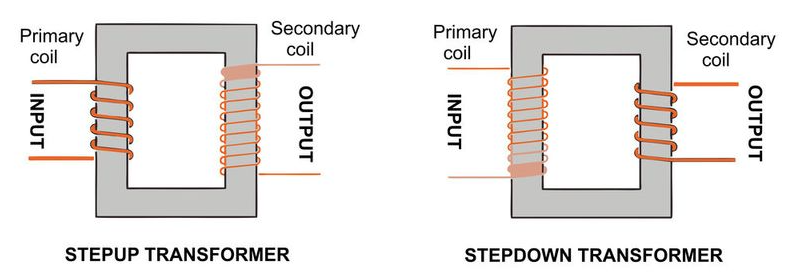
Types of Transformers Based on Turns Ratio
Different types of transformers operate based on their turns ratio.
Step-Up Transformer
A step-up transformer increases voltage from the primary side to the secondary side.
This happens when:
Secondary turns > Primary turns
These transformers are commonly used in power generation stations to increase voltage for transmission.
Step-Down Transformer
A step-down transformer decreases voltage from the primary side to the secondary side.
This occurs when:
Primary turns > Secondary turns
These transformers are widely used in household power supplies and electronic devices.
Isolation Transformer
An isolation transformer has equal turns in both coils.
Primary turns = Secondary turns
This type does not change voltage but provides electrical isolation for safety.
How the Transformer Turns Ratio Calculator Works
The Transformer Turns Ratio Calculator on Engineering.CalculatorFree.in simplifies these calculations.
Users only need to enter basic electrical parameters, and the tool instantly calculates the turns ratio.
Typical inputs include:
Primary voltage
Secondary voltage
Primary coil turns
Secondary coil turns
The calculator automatically determines the ratio and provides accurate results within seconds.
Benefits of Using an Online Transformer Turns Ratio Calculator
Manual calculations can sometimes be time-consuming or prone to errors. Using an online calculator provides several advantages.
Using a Transformer Turns Ratio Calculator allows engineers to verify transformer design parameters quickly. Whether you are analyzing a step-up or step-down transformer, the Transformer Turns Ratio Calculator ensures precise electrical calculations.
Faster Calculations
The calculator produces instant results, saving time during design or analysis.
Improved Accuracy
Automated calculations reduce the risk of mathematical errors.
Easy for Students
Electrical engineering students can quickly verify homework problems or understand transformer relationships.
Helpful for Engineers and Technicians
Professionals working with electrical systems can quickly estimate transformer parameters during system design.
Practical Applications of Transformer Turns Ratio
Transformer turns ratio calculations are used in many real-world applications.
Power Distribution Systems
Electric utilities rely on transformers to adjust voltage levels across transmission networks.
Electronic Circuits
Many electronic devices use transformers to convert AC voltage to appropriate levels.
Industrial Equipment
Manufacturing plants use transformers to supply machinery with correct voltage.
Renewable Energy Systems
Solar and wind power systems use transformers to match grid voltage levels.
Example of Transformer Turns Ratio Calculation
Let’s consider a simple example.
Suppose:
Primary Voltage = 220V
Secondary Voltage = 110V
Using the transformer equation:
Turns Ratio = 2:1
This means the primary coil has twice the number of turns as the secondary coil, making it a step-down transformer.
How to Use the Transformer Turns Ratio Calculator
Using the calculator on Engineering.CalculatorFree.in is straightforward.
Visit the transformer turns ratio calculator page.
Enter the required electrical values.
Click calculate.
The system instantly displays the turns ratio.
This quick process allows engineers and students to perform accurate calculations without complex manual formulas.
Advantages of Using Engineering.CalculatorFree.in
Engineering.CalculatorFree.in offers a wide range of engineering calculators designed to help students, professionals, and researchers.
The transformer turns ratio calculator is particularly useful because it:
Provides instant results
Works on all devices
Requires no registration
Simplifies engineering calculations
The platform aims to make technical calculations easier and more accessible for everyone.
Tips for Accurate Transformer Calculations
To ensure accurate results when calculating turns ratio:
Always double-check voltage inputs
Use correct unit values
Verify coil turn numbers
Consider transformer efficiency in real systems
Following these steps helps achieve reliable results in electrical engineering projects.
Conclusion
The transformer turns ratio is a fundamental concept in electrical engineering that determines how voltage changes between the primary and secondary sides of a transformer. Accurate calculation of this ratio is essential for designing efficient power systems, electronic circuits, and industrial equipment.
The Transformer Turns Ratio Calculator on Engineering.CalculatorFree.in provides a fast and reliable way to perform these calculations without manual effort. Whether you are an electrical engineering student, technician, or professional engineer, this tool helps simplify complex calculations and improve understanding of transformer behavior.
If you frequently work with electrical systems or want to learn more about transformer design, using an online calculator can save time and ensure accurate results every time.
You May Follow: